US&R k9

AL-TF1 Canine Section
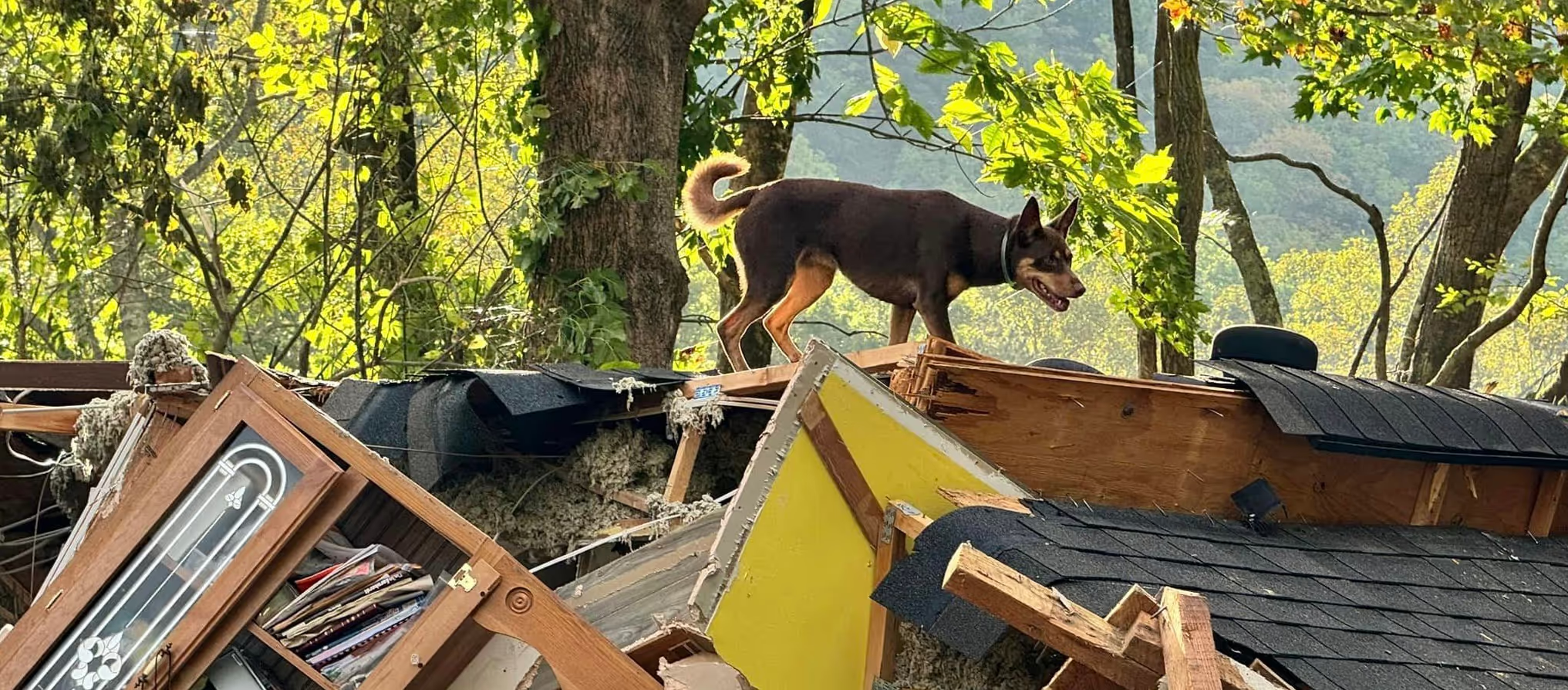
From locating survivors deep beneath rubble to bringing closure through human remains detection, these canine-handler teams are the heartbeat of our search operations. Disaster K9s can search large or dangerous areas quickly, covering terrain that is unsafe or inaccessible for people. They extend the reach of the USAR team, giving victims their best chance of being found—and ensuring that no one is left behind.
Training & Certification
Our K9 teams undergo rigorous, ongoing training to earn and maintain FEMA-equivalent certification standards. Dogs must be able to search in extreme conditions, ignore distractions, and work seamlessly alongside rescue personnel. Handlers train continuously to read their canine partner’s signals, care for them in the field, and integrate K9 search results into the overall rescue strategy.
Live Find K9s
Live-Find dogs are trained to detect the scent of living humans trapped beneath rubble, collapsed structures, or debris fields. They can pinpoint survivors faster than any mechanical device, guiding rescuers to the right location when every second matters. These dogs work confidently in hazardous, noisy environments and alert their handlers through a trained behavior when they locate a person.
Human Remains Detection (HRD) K9s
HRD, or cadaver, dogs specialize in detecting the scent of human remains. They are deployed when the mission shifts from rescue to recovery, helping bring closure to families and supporting investigative needs.
K9 Requirements
Best Practices in Incident Command
Logs LF
Logs HR
Canine Search Specialist Computer Based Training
Progress Check 1
PC 1 Requirements
Progress Check 2
Progress Check 2
Progress Check 3
Progress Check 3
Progress Check 4
Progress Check 4
Progress Check 5
Progress Check 5
SUSAR Standards
Certifications
K9 Resources
Questions? Contact Us Here